Private label hair care for salons: what to prepare before the first order
A salon retail line starts at the backbar, not the shelf. What to decide about sizes, pairing and naming before you ask for a quote.
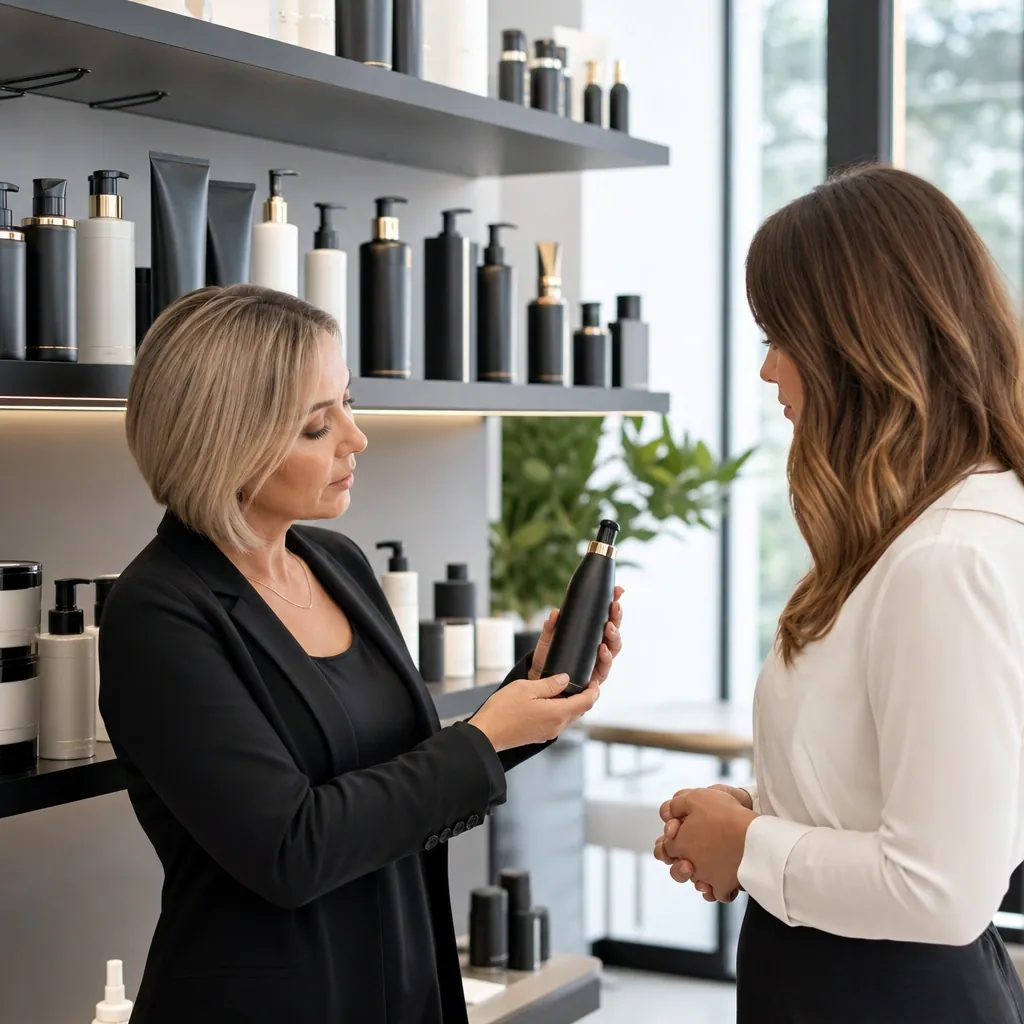
The salons that end up with a retail line people actually buy almost always start from the same place: the products already in the backbar. Not a catalogue, not a competitor’s shelf — the bottle the stylist reaches for without thinking.
That is the difference between a line that sells and a line that sits.
Start from the routine, not the range
Write down what the salon uses in the chair, in order: what goes on before the wash, what cleanses, what conditions, what goes on wet, what goes on dry.
You will usually find three or four products doing all the work. Those are your first SKUs. A retail line of eight products where four are invented for the catalogue will not sell, because nobody in the salon can explain what the other four are for.
The three decisions that shape everything
Sizes. Backbar and retail want different fills. A litre pump for the basin, a 300 ml bottle for the shelf is the most common pair — same formula, different closure, and the client recognises the product as the one they just had used on them.
Pairing. Shampoo and conditioner should read as a pair on the shelf, whether the packaging matches exactly or deliberately contrasts. What matters is that the client can tell at a glance which two belong together.
Naming. The label can carry the salon name, or a separate brand the salon owns. Carrying the salon name is faster to trust and harder to sell outside the chair. A separate brand is more work up front and more useful if you ever want to sell beyond your own clients.
What the packaging has to survive
A salon shelf is not a retail shelf. The product sits under warm light, gets picked up with wet hands, and is often stored in a back room that is not climate controlled. Two practical consequences:
- Print and labels have to survive humidity, not just look good in a render.
- The cap has to work one-handed — a pump that needs two hands will be replaced by a competitor’s bottle.
If the first packaging choice is a compromise, make it a compromise on decoration, not on the component.
Running a small first order
Most salons start with a single SKU, or one wash pair, in one size. That is a feature, not a limitation: it proves the retail habit exists before you spend on a second component.
The usual second order is a mask, because it is the product clients ask about after a treatment — and by then you know which clients actually buy.
What to send when you ask for a quote
- The routine you already use, by step
- Which product clients ask about most
- Retail size and backbar size
- Whether the label carries the salon name or a separate brand
- A rough number of retail units for the first order
Five lines. With those, a supplier can tell you which existing direction fits and what the packaging does to the minimum.
The formats most salons start with are on the hair care range, and the salon route is set out in more detail on the salon page. If the routine is already clear, the brief form takes a minute.