Sulfate-free shampoo: what the claim actually requires
Sulfate-free is a formulation decision with a packaging cost. What changes when you remove SLES, and which claims you can safely print once you do.
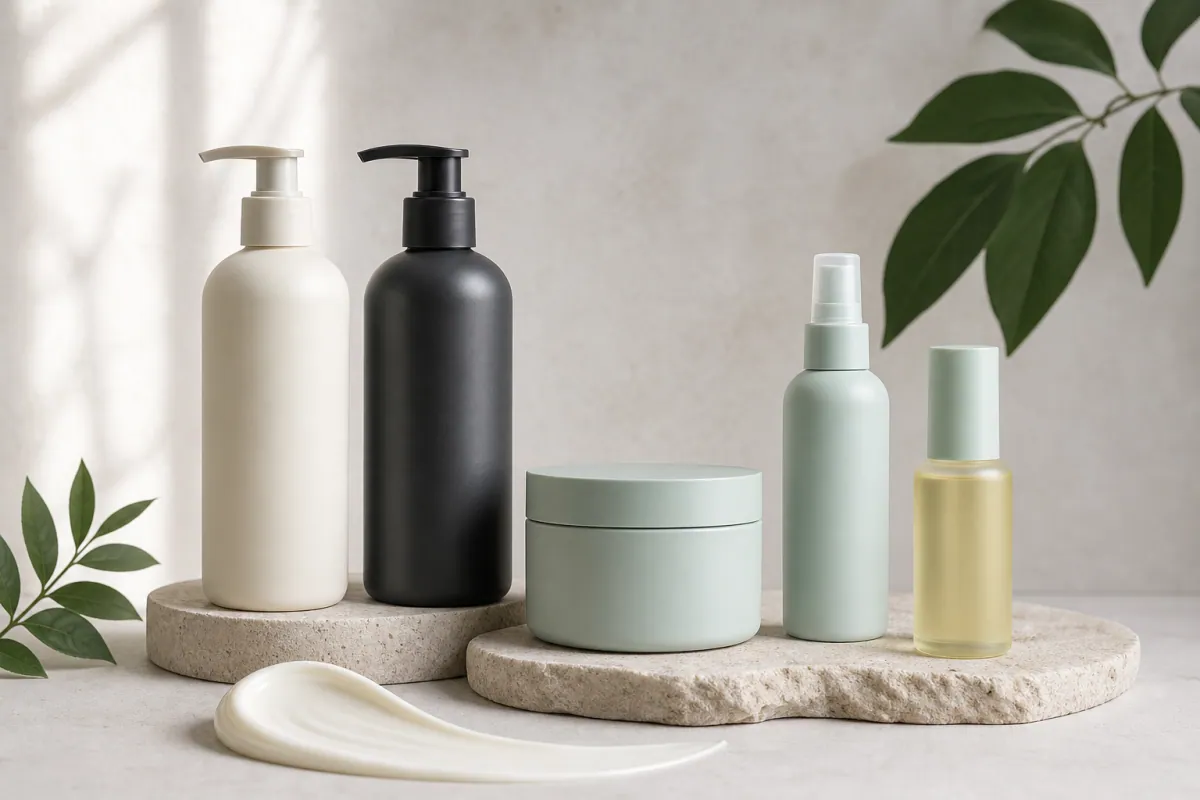
“Sulfate-free” is one of the most requested starting points in a hair care brief, and one of the most misunderstood. Buyers usually mean one of three different things, and the packaging cost is very different depending on which.
What the customer is actually asking for
A gentler wash. They associate sulfates with a tight, squeaky scalp and with colour fading faster. This is the real request, and it is about the surfactant system, not about one ingredient.
A label they can trust. They read the back of the bottle and look for a word they have been told to avoid. This is a marketing request, and it is satisfied by the ingredient list.
A product for a sensitive scalp. This is a different brief entirely, and it usually needs a mildness test rather than a marketing claim.
Most briefs want the first and describe the second. Confirming which one changes the formula route, the cost, and what you can print.
What actually changes in the formula
Removing SLES or SLS means replacing the primary surfactant with a milder system — typically coco-glucoside, sodium cocoyl isethionate, sodium lauroyl methyl isethionate, or a blend.
Three practical consequences:
Foam drops. Sulfate systems foam generously and cheaply. Mild systems foam less, and the foam is looser. Customers judge lather as “cleaning”, so the formula has to compensate with technique rather than with more surfactant.
Cost rises, usually 15–40% on the concentrate. Not because the ingredients are exotic, but because you need more of them to reach the same cleaning performance, and because the mild surfactants cost more per kilo.
Texture and stability need work. The viscosity build is different, and pearlising agents behave differently. This is where a “simple swap” turns into development time.
What you can print, and what you cannot
Safe. “Sulfate-free”, “no SLS/SLES”, “gentle daily cleanser”, “colour-friendly wash”. These describe the formula honestly and are widely accepted.
Needs care. “Hypoallergenic”, “dermatologically tested”, “suitable for sensitive skin” — each of these has a market-specific definition and, in the EU, often needs substantiation on file.
Not safe. Anything medical: “treats scalp dermatitis”, “repairs the skin barrier”. A cosmetic product cannot claim a therapeutic effect.
The rule of thumb: if the claim describes what the product is, it is usually fine. If it describes what the product does to a condition, it usually is not.
The trap: “sulfate-free” with a sulfate
Some formulas use a sulfate-based surfactant that does not carry the word “sulfate” in its INCI name. Regulators in several markets treat this as misleading. If your brief is sulfate-free for a reason rather than for a label, tell the formulator why — the answer changes which substitutes are acceptable.
What to send to your supplier
- Why you want sulfate-free — gentleness, label, or a specific scalp concern
- Which sulfates must be absent — all of them, or only SLS/SLES
- Whether the range also needs to be silicone-free, and whether that is a hard requirement
- The foam expectation, because a low-foam shampoo needs different packaging copy
- The market, since the claim wording is checked against it
With those five, a formulator can tell you within a day whether an existing base fits or whether this is a development project.
If you are testing the category, the hair care range lists the wash directions we already produce, and the repair and frizz solution explains how a wash-and-treat routine is usually planned. For a specific brief, the contact form takes a minute.